What is values-based recruitment and how does it lead to better hires?
Learn what values-based recruitment really means, how it works in practice and why it leads to stronger leadership appointments.
Values-based recruitment is often misunderstood. It’s sometimes treated as a softer alternative to “proper” assessment, or as something that sits alongside the real work of hiring. At Peridot, we see it differently.
Values-led recruitment is one of the most rigorous ways to appoint well. It focuses on aligning a candidate’s motivations, behaviours and judgement with an organisation’s purpose, not just their skills or experience. It looks beyond what someone has done and pays attention to who they are, how they make decisions and why they want to do the work.
When done properly, it leads to stronger appointments, better retention and fewer mis-hires. Our work across health, social care and the charity sector shows this clearly, where commitment and values matter just as much as capability.
Values-based recruitment looks beyond skills and experience
Skills can be learned. Values are much harder to shift.
This is one of the principles that underpins our approach to recruiting for values. That doesn’t mean experience doesn’t matter. It does. But experience without alignment often leads to frustration on both sides. People may be capable, but not committed. Technically strong, but uncomfortable with the realities of the role or the organisation’s purpose.
That’s why our recruitment processes are designed to explore how people behave under pressure, how they work with others and what motivates them to do the work in the first place. This is where long-term performance and retention come from.
Role briefings in a values-led hiring process
Our process starts with understanding your organisation, the role and the context around it. That includes listening carefully to what’s working well, what’s under strain and what kind of leadership is genuinely needed next.
These conversations allow us to represent your organisation realistically and optimistically, and to target people who are motivated by the work itself, not just the title. They also help ensure that values are embedded from the very start of the process, not added later as an afterthought.
Read more: Chairing a charity through financially challenging times
Writing job descriptions for values-led recruitment
We take time to understand your organisation before a job description is written. Not just what you do, but how decisions are made, where leadership really matters and what kind of person will thrive in the role.
Overly rigid lists of criteria can unintentionally narrow the field, exclude strong candidates and prioritise polish over potential. We work with you to shape job descriptions that are honest about the challenge, clear about expectations and open about growth and learning.
As one candidate reflected:
“I really like the way this role is presented in the job description, with a focus on recruiting someone who’s interested in growing as a leader, and taking a less rigid approach to experience and skills across a broad portfolio of work. It’s refreshing, and I’m sure will attract some good candidates.”
That response didn’t come from lowering expectations. It came from being clear about what really matters.
Attracting candidates who align with your values
Our focus is always on research and executive search. We showcase roles in a way that reflects the organisation’s purpose and values, raising the profile of the opportunity while reaching people beyond familiar networks.
Take trustee recruitment. Four in five charities currently have at least one Trustee vacancy. At the same time, hundreds of Trustee roles sit on job boards competing for attention. Advertising is important, but it mostly reaches people who are already actively looking.
Proactive outreach opens the door to a much broader range of candidates, some of whom might not have even considered a Trustee role before. This approach attracts candidates who are genuinely interested in the mission and challenge of the role, not just the next step on a CV.
Supporting better hiring decisions
Throughout the process, clients receive regular updates and clear feedback. We guide and advise at every stage, helping boards and panels stay focused on what they said mattered at the outset. This often means challenging assumptions, particularly where decisions drift towards comfort or familiarity rather than evidence.
Read more: 7 common hiring mistakes and how to avoid them
Supporting candidates as people throughout the process
We take great care in supporting candidates throughout every stage of the process.
That means:
- Clear application guidance
- Interview preparation
- Honest, timely feedback
As an active charity trustee, I’ve been on both sides of the table. The experiences that have stayed with me aren’t the most intimidating interviews or the slickest processes. They’re the ones where I felt supported, encouraged, and treated fairly, with timely and thoughtful feedback.
Those experiences shape trust and reputation long after the recruitment process ends. Take this recent candidate feedback:
“My experience with Peridot was exceptional. The job description was punchy and concise. The application process was clear and proportionate. The team accommodated my childcare commitments, helping keep women in contention for leadership roles. The feedback I received was outstanding: clear, well-structured, and genuinely actionable. The whole process respected me as an individual. While this interview didn’t go my way, I leave with useful insights for future interviews and high regard for both Peridot and their client.”
How to fairly assess for values in recruitment
We support clients in assessing applications and agreeing on which candidates to interview, using values as a clear reference point. Interviews and assessments are designed to explore judgment, behaviour and motivation, often through scenario-based questions grounded in real organisational challenges.
Sharing interview questions in advance is part of this approach. It supports fairness, reduces bias and allows candidates to demonstrate the quality of their thinking. Panels still make decisions based on evidence. The difference is that candidates are assessed on substance rather than speed or confidence.
Providing meaningful feedback
At Peridot, we take care to provide developmental feedback to candidates and to gather feedback from clients and candidates alike. This helps us reflect on our practice, measure impact and keep improving how recruitment is done.
How values-based recruitment leads to better hires
Appointments made through values-aligned recruitment tend to last longer and land more effectively.
That’s because:
- Expectations are clearer on both sides
- Decisions are grounded in behaviour and motivation, not instinct
- People join with a realistic understanding of the role and the organisation
Both the organisation and the candidate know what really matters from day one, which builds trust and creates a culture where people feel they can do their best work.
Why values-based recruitment is a leadership responsibility
A values-led approach to recruitment is about being intentional about the type of person your organisation and role needs.
At Peridot, we believe recruitment is a leadership act. It reflects how organisations use power, how they treat people and what they value in practice. If you’re running a recruitment process and want it to be fairer, more rigorous and human, values-based recruitment is a strong place to start.
If you’d like to talk about how this approach could work in your organisation, we’re always happy to have a conversation.
Category:Board Recruitment & Development

Written by
Conor Naughton
Senior Consultant | Charities
Conor Naughton has built a strong track record of helping purpose-driven organisations thrive, with a career spanning small charities, higher education and social impact. From leading trustee recruitment for national charities to shaping inclusive education strategies at leading UK universities, his work has been defined by a commitment to people, opportunity and positive change.
At Peridot Partners, Conor is a Senior Consultant working with small and medium-sized charities and students' unions to recruit exceptional leaders and board members. He brings deep sector insight, governance expertise and a warm, people-first approach, ensuring candidates feel genuinely supported throughout the recruitment process.
Prior to joining Peridot, Conor worked in higher education, where he championed social mobility, helped narrow attainment gaps and promoted evidence-informed learning practices. He has also authored national research and guidance on student belonging and attendance, helping shape conversations across the sector.
Conor's governance experience began early in his career. As a two-year President and Chair of the Board at Nottingham Trent Students' Union, he led the recruitment of a new CEO and senior leadership team and implemented governance and organisational reforms that strengthened performance. He later served as a governor at Nottingham Trent University, contributing to the development of the university's strategic vision and priorities.
Now Deputy Chair of Salford Students' Union, Conor is a passionate advocate for young trusteeship, having served on the boards of three organisations before the age of 30, including the British Youth Council and Nottingham Trent Students' Union. Through these roles, he continues to support causes he deeply values, particularly those focused on youth, education and social mobility.
Outside of work, Conor is a keen runner, whether at Parkrun or taking on half marathons across Europe, and recently completed his first full marathon. He's also a dedicated foodie with an ever-growing restaurant list and a loyal supporter of Luton Town.
Related articles

How chairs and chief executives navigate challenge together
Read further
Five tips for non-executive director recruitment
Read further
How to chair a board well: what effective boards and chairs do differently
Read further
What makes an effective MAT trustee?
Read further
Strengthening boards with our trustee recruitment partnership
Read further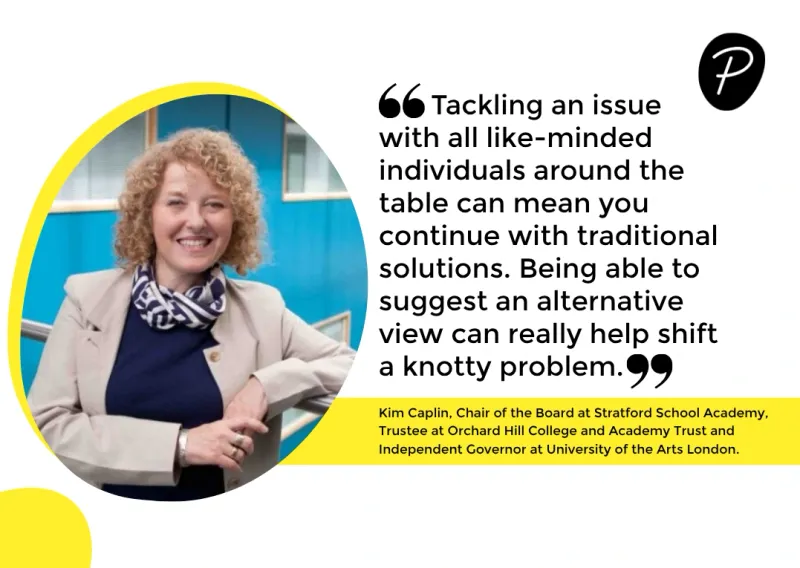
Why cross-sector board appointments strengthen governance: Insights from Kim Caplin’s journey
Read further
Unlocking the power of Development Boards
Read further
I’m thinking about becoming a Further Education Governor – what do I need to know?
Read further
Why cognitive diversity on boards leads to better decisions
Read further
How to get CEO and Chair succession planning right
Read further
Why becoming a charity chair could be the most rewarding move in your career
Read further