
How to get CEO and Chair succession planning right
Too many charities leave CEO and Chair succession too late. Learn how to plan leadership transitions that protect your purpose, culture and continuity.
Every charity faces leadership change. You won’t always know when it’s coming, and it can be unsettling for any organisation, but you can be ready for it.
Good charity succession planning takes time, clarity, communication and a commitment to protecting your charity’s future.
Jennifer Horan and David Hingley recently spoke with Community Foundation North East, who work closely with charities across the country to strengthen governance. This blog builds on that conversation, sharing what works when planning for CEO and Chair transitions.
Planning ahead helps your charity stay steady through change to protect your mission, support your community and reduce the need for last-minute decisions.
The more prepared you are, the fewer surprises there’ll be.
Start before you think you need to.
Charity succession planning only works when you give it time. Start early and treat it as a key part of building stronger leadership by including regular conversations about it.
Use your regular governance reviews to look ahead. Talk about what the organisation might need, what current leaders are thinking and how prepared you are for change. These conversations feel easier when they’re part of regular board business, rather than something saved for a crisis.
Leaders should feel comfortable sharing their plans. One Chair shared: “I’m stepping down in 2027 and will bring the incoming Chair on as a Trustee six months or more before I exit.” This approach provides space for learning, reflection, and continuity during a potentially turbulent time.
Support future leaders through mentoring, coaching and board development. Offer practical ways to build skills, grow confidence and take on more responsibility over time to encourage people to step up from within the organisation.
Ask the right questions in your charity succession planning.
When a Chair or CEO plans to step down, the first question is often, “Who’s next?”. A more useful question might be, “What will the charity need from its next leader?”
Good planning begins with clear questions and a shared understanding of what comes next.
It’s easy to assume the role should stay the same, and you need a similar leader to fill the gap. But the demands on charities shift significantly over time, so take time to think about what’s needed now, not just who’s available. Start by reviewing the role itself and be open to changes in structure, style and expectations.
Chair succession is also a good time to revisit your constitution. Check the rules on board terms, re-elections and voting, which all set important boundaries for how succession can work. They also give clarity to new leaders about what’s expected of them and how long they’re likely to serve.
Finally, you must find out if the role itself is financially sustainable. In smaller charities, CEOs are often responsible for fundraising for their own salary, which can be a hidden pressure that shapes both their exit and the search for a successor.
Think about diversity.
Diversity and inclusion should be integral to your charity’s succession planning from the start.
If charity succession planning is just a search for the best “on paper” candidate, you’re likely to miss out on people with different backgrounds, fresh thinking or lived experience that reflects your communities.
If your next leader looks and thinks exactly like the last, it’s easy to drift into habits that feel safe but don’t move things forward.
Look carefully at what you’re asking from your next Chair or CEO. Are the expectations realistic? If you’re seeking senior leadership or board experience but don’t create opportunities for people to gain that experience within your organisation, you’re reinforcing cycles of narrow and predictable leadership.
Can you be open about the structure of the role, such as the time commitment, or sharing responsibilities differently? This opens doors for candidates who bring valuable skills but can’t commit to traditional formats.
Look at the habits, traditions or expectations that have shaped your board and leadership team over time. Who do they work for, and who might they be holding back?
We recently worked with a charity that had always recruited Chairs through personal networks, often from very similar pools. It felt efficient, but over time, the board began to realise they were recycling the same perspectives. By widening their search and removing assumptions about availability and background, we were able to appoint a new Chair with lived experience of their cause and a different kind of leadership style.
And when it comes to developing leadership teams, it’s hard to put it better than Henry Ford:
“What if we train and invest in someone and they leave?” “What if we don’t, and they stay?”
Exits are an opportunity.
When a leader prepares to leave, it’s a moment to pause and learn. Their experience holds insight that can strengthen the future.
Ask what they know now that they wish they’d known at the start. Document what they’ve learned about people, relationships, and how things really work. Cultural knowledge often sits with individuals, and it needs to be shared before it disappears.
Create space for honest reflection. What challenges did they face that weren’t visible to others? What systems slowed them down? What helped or hindered?
Support transitions with structure. Shadowing, handovers and knowledge-sharing sessions all help, especially when done well in advance of departure. Incoming Chairs and CEOs may need time to see these insights in action before being able to ask meaningful questions.
We worked with a departing CEO who set up a series of one-to-one conversations with staff, partners and trustees, then passed on their reflections to the incoming leader. This helped the new CEO shape priorities in line with the strategy by understanding how people felt, what worked for them and what needed attention.
It’s also worth thinking about what role, if any, a departing leader might play after they’ve stepped back. Some continue to support the charity as mentors, advisors or advocates. The shape of the role may change, but the contribution doesn’t have to end. What matters is being clear about what’s helpful and what isn’t, for everyone involved.
Know when to move on.
Some leaders stay longer than they should. Often, it’s because they care deeply and want to see things through. But over time, staying too long can make change harder for the people around them.
Good leadership includes knowing when it’s time to step aside. That decision can take time and reflection, especially when someone feels closely tied to the work. Letting go doesn’t mean walking away. It just means giving the next person a real chance to lead.
Transitions often feel more complicated when it’s a founder or long-standing Chair stepping back. There’s usually a strong emotional connection, and their influence may still be felt long after their term has ended. Building succession into regular board thinking and leadership conversations can make these decisions feel less personal and give the charity space to plan ahead.
Read more about how to recruit a charity chair.
Explore flexible leadership structures.
Leadership doesn’t always follow a single format. Some charities benefit from exploring different approaches when planning for change.
An interim appointment can create space to think. It gives the board time to reflect on what’s needed, stabilise operations and avoid rushing into long-term decisions. It can also be a way to test internal talent and see how potential candidates work in practice.
Some boards are also considering co-leadership models. This might mean shared CEO roles, or a chair and vice-chair with clearly defined but connected responsibilities. This can be a useful way to bring in different strengths, especially when the demands of leadership have grown or shifted.
One charity we worked with brought in co-chairs during a period of change. One focused on internal governance and board development, while the other led on external partnerships and advocacy. This allowed them to lead where they had the most experience, while still benefiting from a united oversight.
What matters most is finding a structure that fits your charity now, rather than replicating what came before, and staying open to adjusting it again in future.
Learn more about the benefits and risks of co-chairing.
Communicate clearly during leadership changes.
Leadership change often brings uncertainty.
Good communication builds trust during leadership transitions. People want to know what’s happening, and what it means for them. Transparency helps people feel secure and valued, while silence can create doubt.
Start by sharing the process, not just the outcome. Be open about what decisions are being made, who’s involved and when updates will come. If some details need to stay confidential, explain why and tell people when they can expect an update.
Don’t forget external stakeholders. Service users, funders, partners and community leaders often rely on steady relationships. A brief update during the transition, even just to explain next steps, can be an opportunity to increase or maintain trust externally.
Every board member has a role in charity succession planning by joining early conversations, supporting the process and staying present during periods of change.
Leaders don’t need to have all the answers, but they do need to listen, invite feedback and make time for the questions and concerns.
Charity succession planning doesn’t end with the handover. Once the transition is done, take time to reflect. A formal check-in after three or six months can reveal what’s working, what still needs attention, and what support the new leader might need.
The more often you make time for planning and reflection, the more natural it becomes a part of how the organisation runs and part of how leadership is shared.
Category:Board Recruitment & Development

Written by
Jennifer Horan
Head of Board Appointments
With three degrees, Jennifer thrives on challenges, especially when supporting boards in finding their balance. As a trustee and board recruitment consultant, she ensures every board is diverse, inclusive, and committed to making an impact.
For trustee and chair recruitment, Jennifer specializes in governance across charities, non-profits, and INGOs, championing neurodiversity in recruitment. She supports charities in accessing diverse talent, transforming boards, and boosting effectiveness. From multi-year trustee campaigns to building boards from scratch, her partnerships ensure sustainable governance, strategic succession planning, and significant impact.
Jennifer appoints inclusive, innovative, creative, and resilient leaders enabling organizations to flourish toward equity, sustainability, and high impact.
She has led searches for specialist trustees including finance roles, treasurers, and clinicians, with expertise in recruiting individuals with lived experience—autistic people, blind people, people who stammer, disabled people, and single parents—as well as niche professionals such as economists, conservationists, and neurologists.
Outside the boardroom, Jennifer enjoys reading, practices daily meditation and breathwork, and spends time with her two British Blue Shorthairs. As an Irish woman with roots in Limerick School of Music Orchestra and a background in Sean-Nós singing, she aspires to become a Kirtan session leader.
Related articles

Guidance for your first chair role
Read further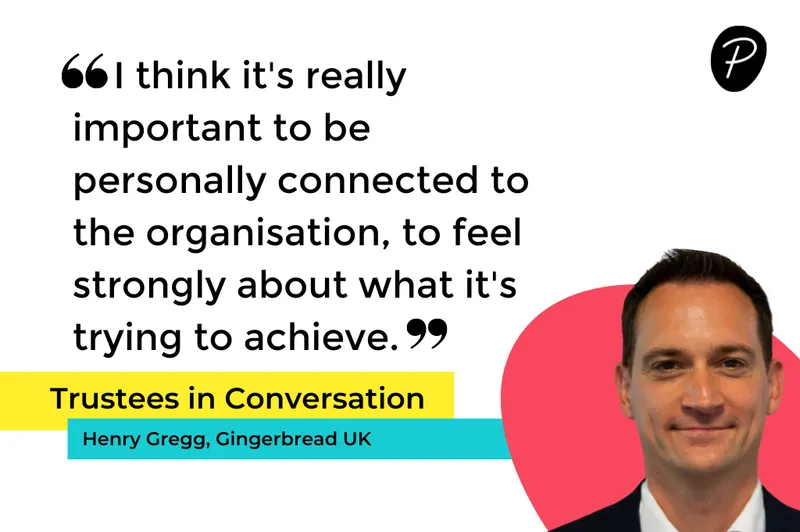
Trustees in Conversation: Henry Gregg
Read further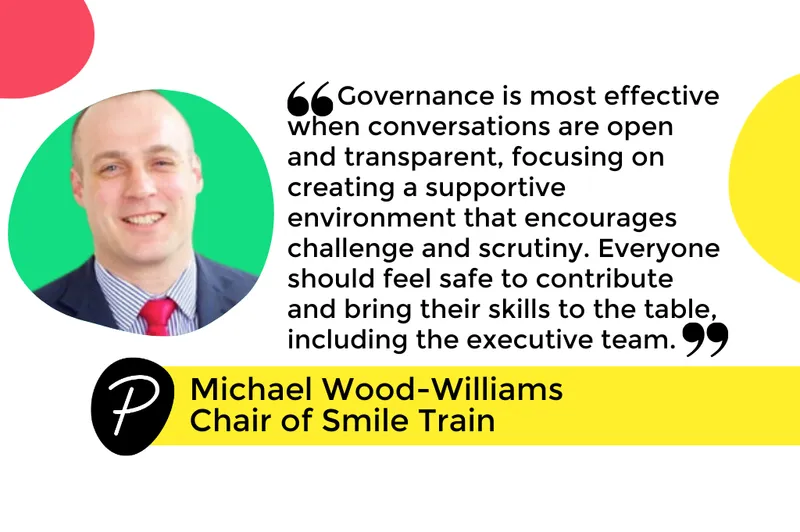
Chairs in Conversation: Michael Wood-Williams
Read further
5 steps to creating a board succession plan
Read further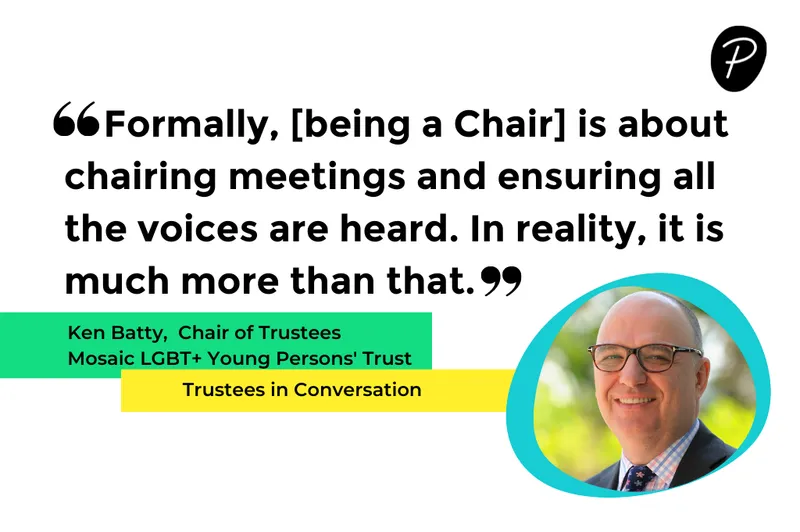
Chairs in Conversation: Ken Batty
Read further
Trustees in Conversation: Ian Adams
Read further
Seeking diversity with new trustees: how to recruit for diverse boards?
Read further
How chairs and chief executives navigate challenge together
Read further
How to chair a board well: what effective boards and chairs do differently
Read further
What is values-based recruitment and how does it lead to better hires?
Read further
What makes an effective MAT trustee?
Read further