Seeking diversity with new trustees: how to recruit for diverse boards?
How do you encourage trustee diversity and board member diversity? Jennifer Horan offers her pearls of wisdom on how to recruit for diverse boards.
Making positive strides in the charity sector
ACEVO identified in their 2018 Pay & Equalities Survey that, from Chief Executives surveyed, more female than male respondents were represented in the survey. A total of 57% of respondents were female, and 42% were male. Female percentage of the workforce across the charity sector is 65%. This is a positive step in the right direction for the sector, but what about Diversity at Board level?
According to The Charity Governance Code the term ‘diversity’ includes the nine protected characteristics of the Equality Act 2010 as well as different backgrounds, life experiences, career paths and diversity of thought.
We already know from the Charity Commission’s report – Taken on Trust – that the makeup of UK charity boards are as follows: men outnumber women on boards by 2:1, trustees don’t reflect the communities and beneficiaries that they serve – in fact the majority of trustees are recruited through informal networks – with only 5% coming through open advertisements. This perpetuates a lack of diversity. Trustees, for the most part, come from an above average income and education and, in many cases, are older. In fact, the charity commission has highlighted that 92% of trustees are white.
Diverse organisations attract more diverse talent and generate more income
More diverse groups and more diverse boards have better decision-making processes and can think more innovatively and creatively. What inhibits innovative and generative thinking is Groupthink – which occurs within a group of people in which the desire for harmony or conformity in the group results in an irrational or dysfunctional decision-making process and outcome.
What leads to Groupthink and hence bad decision-making processes? Often those groups who are at risk of Groupthink are ones who are in a close-knit group, who want to avoid arguments, disputes or even positive debate and who dislike going against the traditional decision-making process – these groups fear friendships breaking down.
One feature of the groups most at risk of Groupthink are ones with members who originate from similar socio-economic backgrounds with the same norms, values and experiences – this group homogeneity is a precursor to Groupthink. There are many examples from the private sector and corporate world where boards with carbon copy board members then go on to fail because of hubris, poor challenge, too much trust and a fear of rocking the board.
How can we avoid Groupthink and encourage board diversity?
Most days I hear the same requirements when boards are looking for new trustees: “We need someone with previous board experience” and “we need to think about diversity”.
Are these mutually exclusive terms? Do we make assumptions that just because one has been on a board in the past that it means experience equals skill? So, if we all acknowledge that boards whose trustees have different backgrounds and experiences are more likely to encourage debate and to make better decisions, then what are the barriers and how we can we change our thinking to avoid the breakdown of our charities?
I see everyday boards who want the perceived experience, which is understandable, especially given the economic challenges.
It’s comfortable to appoint someone who has been there and done that, but these boards are reluctant to see the skills which different types of people provide.
These boards can miss the opportunity of appointing a perceived less experienced individuals who is just as skilled who will offer challenge, a different way of thinking, and often ask the “silly” questions everyone else is too afraid to ask. We must think, more times than not, society has not always afforded everyone the same perceived experience as others.
Improve board dynamics through diversity and recruiting for the future
To support a change and to improve board dynamics we must hope that society has admitted there is more than an issue with diversity and are committed to finding a solution to challenge and change it.
Likewise, we need to understand unconscious bias and spot the signs but, equally important, as ACEVO suggests – recruit for potential, not perfection. Recruit for the future and afford your organisations that opportunity. Trust that people will grab the opportunity for growth and new experiences with both hands and will add value by bringing a new thinking style to board – with no prejudice towards age, gender, BAME, Disabled, LGBTQ, working class or if they’re just at the beginning of their careers.
Category:Board Recruitment & Development
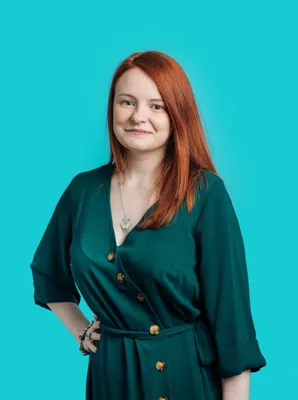
Written by
Jennifer Horan
Head of Board Appointments
With three degrees, Jennifer thrives on challenges, especially when supporting boards in finding their balance. As a trustee and board recruitment consultant, she ensures every board is diverse, inclusive, and committed to making an impact.
For trustee and chair recruitment, Jennifer specializes in governance across charities, non-profits, and INGOs, championing neurodiversity in recruitment. She supports charities in accessing diverse talent, transforming boards, and boosting effectiveness. From multi-year trustee campaigns to building boards from scratch, her partnerships ensure sustainable governance, strategic succession planning, and significant impact.
Jennifer appoints inclusive, innovative, creative, and resilient leaders enabling organizations to flourish toward equity, sustainability, and high impact.
She has led searches for specialist trustees including finance roles, treasurers, and clinicians, with expertise in recruiting individuals with lived experience—autistic people, blind people, people who stammer, disabled people, and single parents—as well as niche professionals such as economists, conservationists, and neurologists.
Outside the boardroom, Jennifer enjoys reading, practices daily meditation and breathwork, and spends time with her two British Blue Shorthairs. As an Irish woman with roots in Limerick School of Music Orchestra and a background in Sean-Nós singing, she aspires to become a Kirtan session leader.
Related articles

How to get CEO and Chair succession planning right
Read further
Guidance for your first chair role
Read further
Trustees in Conversation: Henry Gregg
Read further
Chairs in Conversation: Michael Wood-Williams
Read further
5 steps to creating a board succession plan
Read further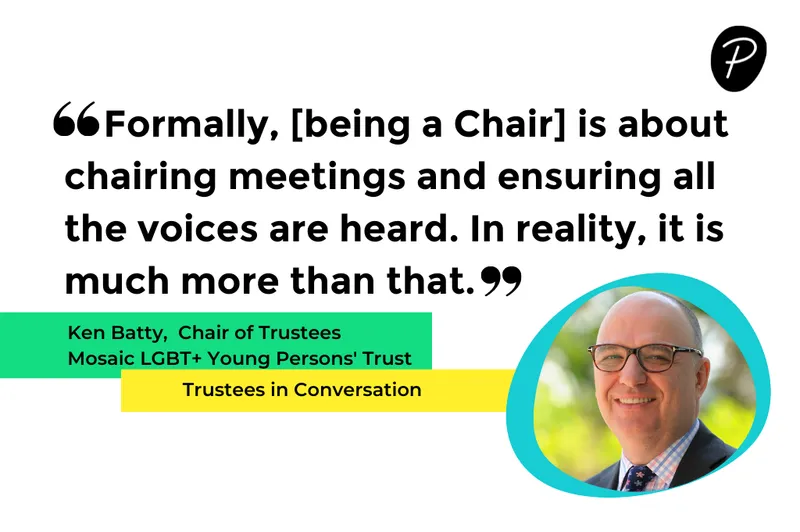
Chairs in Conversation: Ken Batty
Read further
Trustees in Conversation: Ian Adams
Read further
How chairs and chief executives navigate challenge together
Read further
How to chair a board well: what effective boards and chairs do differently
Read further
What is values-based recruitment and how does it lead to better hires?
Read further
What makes an effective MAT trustee?
Read further