
How to chair a board well: what effective boards and chairs do differently
What makes a board truly effective? Learn how board chairs guide strategy, manage risk and support leadership to make better decisions.
Chairing a board well involves far more than running meetings or keeping governance in order. It requires sound judgement and the ability to bring people together around difficult decisions. A strong chair helps the board focus on what matters, supports the chief executive and helps the organisation move forward with confidence.
Chairs often ask what effective boards and chairs do differently. At our recent Cross-Sector Chair Forum, Kate Heaps, Satish Mathur and Grant Taylor explored that question from the perspective of those who have led boards through complex situations.
What makes a board truly effective?
An effective board keeps the organisation focused on its purpose and supports the leadership needed to move it forward. It understands where its role begins and ends and it takes responsibility for how the board itself is working.
Five strategic areas boards need to engage with more directly
Grant highlighted several areas where boards need to be actively involved if they are to guide organisations effectively.
1. People and culture are the board’s responsibility.
People and culture have rarely been seen as the board’s domain and are often left to the executive team or HR.
Yet the people in an organisation ultimately determine whether it can deliver its mission. Without attention to how those people are supported, developed and led, organisations struggle to attract and grow the talent they need.
It also becomes harder to lead meaningful change if the board stays distant from these questions rather than bringing its own experience and perspective to them.
Does your board have the insight and confidence to challenge and support the organisation’s approach to people and culture?
2. Boards must operate at two speeds
Boards need to work with both the long-term and the short-term in view.
When people talk about charity governance, they often focus on the long term: agreeing on strategy and thinking about where the organisation is heading and how it will get there.
But boards also need to deal with what’s happening now. If all the attention sits on strategy and the future, immediate challenges can be missed. The reverse can happen too, where day-to-day pressures crowd out longer-term thinking.
What’s the balance on your board?
3. Technology is a governance question
Technology shapes how boards work and how organisations deliver their mission. It affects how boards share information, how people participate in discussions and how organisations invest in the systems they rely on.
Boards don’t need to be technology experts, but they do need enough understanding to ask the right questions. Digital tools increasingly influence how organisations operate and how boards receive information, so trustees need enough understanding to question how technology is being used and where investment is needed.
If trustees aren’t confident, investment can feel risky simply because it’s unfamiliar.
How confident is your board when technology investment or digital change comes onto the agenda?
4. Rethinking risk
Risk often gets reduced to a register and a rating, appearing on the agenda once or twice a year as a standing item.
How a board approaches risk affects the decisions it’s willing to make. When trustees engage with risk openly, they’re better able to weigh uncertainty and judge where the organisation should move forward.
If risk is treated only as something to avoid, opportunities are easily missed. Boards need to be willing to examine uncertainty and decide where thoughtful risk-taking is justified.
Does your board treat risk as a live strategic conversation, or as a document that’s filed away until it’s needed?
5. Cognitive diversity and blind spots
Diversity isn’t only about background or representation; it also includes how people think, how they process information and how they approach problems.
When boards are made up of people with similar professional histories or ways of reasoning, conversations can feel comfortable, and agreement tends to be reached quickly. But this “alignment” can mask gaps in perspective and leave important questions unexplored.
Cognitive diversity can slow discussions down, but that pause often brings different questions to the surface and challenges assumptions that might otherwise go untested.
Who on your board approaches problems differently, and how do you intentionally make space for that perspective?
Six responsibilities of an effective chair
Alongside the board’s role, the chair bears responsibility. While boards set direction collectively, the chair shapes how that work happens.
Grant highlighted several areas where the chair’s role becomes particularly important. These responsibilities sit with the board as a whole, yet how the board works in practice often depends on the chair.
1. Setting the tone through leadership and accountability
The chair leads the board and helps organise how that work is shared, including delegating responsibility, monitoring board performance and supporting trustees in contributing effectively.
How a chair leads inevitably affects the board’s behaviour. Even where trustees give their time voluntarily, expectations still exist, so if the board never stops to look at how it’s working, the same habits will continue.
That reflection doesn’t need to feel overly formal. Often it simply means helping trustees understand their role, what they’re responsible for and how they can develop in it.
How clear are expectations on your board, and how do you support trustees to perform and develop?
2. Designing meetings that lead to action
Board meetings need to be planned and guided so discussions move toward decisions.
You need to be clear about priorities and make sure previous minutes and agreed actions connect directly to the agenda. It also means being clear about what you need to resolve against each agenda item before the meeting even begins.
Trustees give their time freely, and it’s hard to get busy people in a room for two hours, so the time needs to count. No one wants to return to the same issue meeting after meeting because actions weren’t tied up and decisions weren’t made. If discussions don’t end with clear actions, the same issues return.
Are your meetings clear about what needs to be decided and done, and are trustees accountable for following through on those actions?
3. Strategy, objectives and developmental performance
Strategy and business plans only matter if they are delivered.
Agreeing on targets is part of that work, although how far a chair takes this will depend on the organisation and its culture. What matters is that expectations are clear.
Individual and board objectives can help. For a new trustee, this might include taking responsibility for their own learning and self-induction and checking in regularly on how that process is going.
The purpose isn’t rigid performance management; it’s about helping trustees understand their role, what they’re responsible for and how they can contribute more effectively over time.
Are your strategy, objectives and individual responsibilities clear enough to guide behaviour, and do you revisit them regularly?
4. CEO challenge and support
The relationship between the chair and the chief executive is central to how a board functions. It needs time and attention, not just when problems arise.
Part of that relationship involves offering both support and challenge. Chief executives need space to lead, but they also benefit from thoughtful scrutiny and honest conversation about difficult decisions.
If the chair and chief executive don’t invest time in that relationship, the board’s work with the executive team becomes harder.
How deliberately do you invest in your relationship with the CEO?
We explore that relationship in more detail in our discussion of how chairs and chief executives work together through change.
5. The ambassadorial role and modelling behaviour
Chairs also need to think about the ambassadorial side of the role. That doesn’t always mean being the public face of the organisation. In some boards, the chair takes on that responsibility, while in others, someone else may be better placed.
What matters is that everyone understands who represents the organisation in different settings.
Fundraising events, public engagement and external relationships all require a visible presence. Some chairs are comfortable in that role, while others prefer to sit elsewhere. Either way, the responsibility needs to be understood by both trustees and the executive team.
The chair still plays an important part in modelling how the board behaves. The way a chair engages with colleagues, staff and stakeholders often sets expectations for the board as a whole.
Who represents your organisation externally, and how clearly is that role understood across the board and executive team?
6. Encouraging constructive contributions and planning ahead
Chairs influence what kinds of contributions are encouraged around the board table. When trustees bring their experience with ideas and constructive challenge, those contributions need to be recognised and taken seriously. Protective instincts have their place, but they shouldn’t dominate discussion.
Boards also need to pay attention to their own future. That means understanding the skills currently around the table, noticing when trustees are likely to step down and thinking about what experience might be needed next.
Succession doesn’t apply only to the executive team. It also affects the board’s leadership. From the moment someone joins, it helps to consider how they might develop over time and whether they might take on greater responsibility later.
What behaviours are you reinforcing in your board, and how intentionally are you planning for its future leadership?
Bringing it together as a chair
Chairing well involves paying attention not only to how decisions are made and how responsibilities are shared, but also to how the board engages with the challenges facing the organisation. When boards pay attention to these things, they are better placed to support their organisations through periods of uncertainty.
Category:Board Recruitment & Development

Written by
Marie McQuade
Director | Charities
She recruits specialist trustees from all backgrounds and specialises in recruiting boards that exceed. Every client she has ever worked with has recommended Marie to others, recruited more candidates than anticipated from her, and come back to work with her again.
She has three decades of experience as a leader working across health, housing and social justice in the UK and globally.
After volunteering as a graduate for an INGO in India, she embarked upon a career in the charity sector and grew her passion for creating positive change. Marie brings this passion to Peridot, where she prioritises recruiting exceptional leadership because she believes good governance transforms organisations and the lives of their beneficiaries.
Marie also runs board audits, inductions and training and works with organisations from across the UK and Europe. She has a post-graduate qualification in Organisational Development.
She has been a board and committee member, a mentor for a care-experienced young person, a street worker for homeless people and a counsellor for women and girls.
Outside of her professional life, Marie is completing a Creative PhD at Queens University, practising Zen, and parenting three teenage girls (and a cocker spaniel!). She enjoys spending time outdoors, walking, running, and swimming, as well as travelling, reading, watching films, visiting art galleries, and eating fine food.
Related articles

How chairs and chief executives navigate challenge together
Read further
Why becoming a charity chair could be the most rewarding move in your career
Read further
Philanthropy on boards: the importance of trustees and campaign board chairs
Read further
How to recruit a charity Chair
Read further
Co-Chairing Boards: Challenges and benefits of sharing leadership
Read further
Co-Chairing Boards: What’s expected of modern Chairs?
Read further
Co-Chairing Boards: Changes in the Charity Landscape
Read further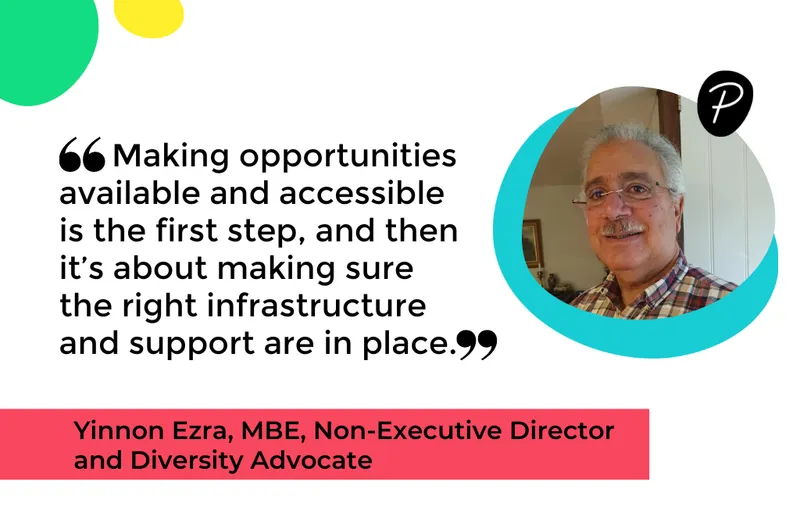
Chairs in Conversation: Yinnon Ezra MBE
Read further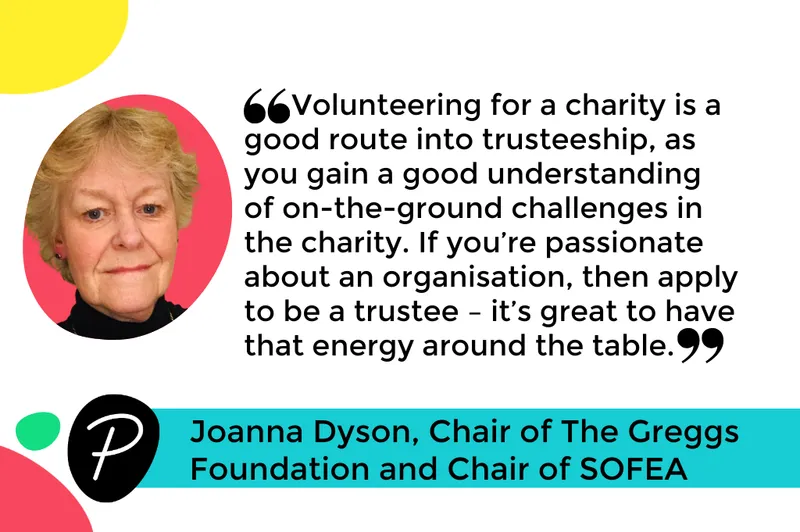
Chairs in Conversation: Joanna Dyson
Read further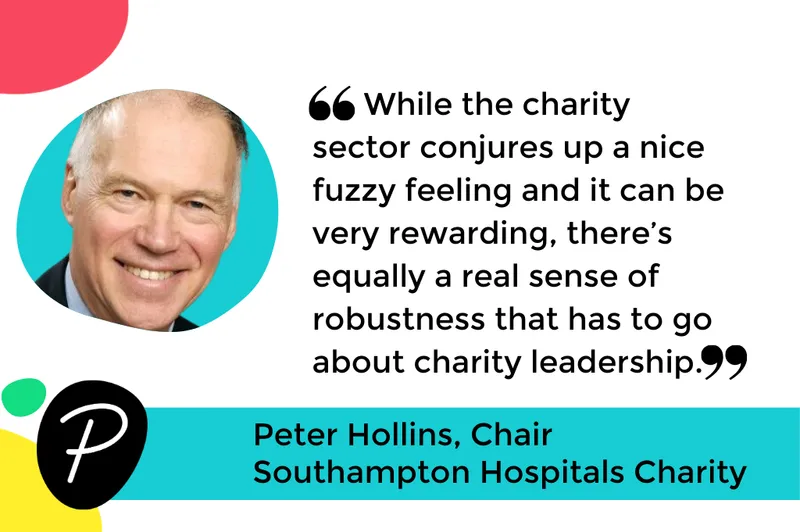
Chairs in Conversation: Peter Hollins
Read further
What are the qualities of an effective charity chair?
Read further