
I’m thinking about becoming a Further Education Governor – what do I need to know?
Thinking about becoming a Further Education Governor? Sarah Atkins-Boal talks about her experience and what you need to know to become a Governor.
If you’ve ever thought about giving back to your community, supporting education, and influencing the future of skills, training and local industries, then becoming a Further Education (FE) Governor is a role that you should consider.
But what exactly does the role involve, and what should you know before jumping in?
What is a further education governor?
Our further education (FE) sector is a vital—and perhaps most diverse—part of the education system, providing a wide range of learning opportunities for individuals predominantly aged 16 and over. FE Colleges cater to the broadest range of learners in the country, supporting school leavers with their first steps into real work settings through apprenticeships, those taking a different kind of vocational training path and others with ambitions of going to university. The sector also supports thousands of adults each year who are trying to acquire new skills, retrain, gain qualifications for career progression, or pursue personal interests. This includes basic English and maths, upskilling, and reskilling.
An FE Governor is a volunteer who sits on the college’s governing board. Together with other governors and senior leaders, they help shape strategy, monitor performance, and make sure the college is serving its students and community effectively. Think of it as being part of the college’s ‘critical friend’ group: supporting, but also challenging, to help the college succeed.
What will you actually do?
As an FE Governor, you can expect to:
- Set the strategic direction and organisational culture by agreeing on the long-term goals for the college, establishing an agreed-upon vision and mission, and aligning the organisational values that governors, staff and students will be expected to uphold.
- Oversee financial health: ensuring resources are used wisely, that budgets are balanced, and that the college, viewed through a business lens, maximises the resources at its disposal to help students achieve positive outcomes and to make staff feel valued for their contributions.
- Monitor quality and outcomes: asking the right questions about teaching standards, student experience, continuous improvement and the progression of both students and staff.
- Ensure legal and regulatory compliance: ensuring the college remains compliant with all statutory duties, including financial reporting, safeguarding, equality and other relevant requirements.
- Champion the community’s needs: ensuring the college remains relevant to local employers, industries, and learners, and evolves in response to regional and national trends.
- An ambassador: using your own platforms and networks to help develop the reputation of the college to gain greater local and national recognition for the outcomes it achieves for its students
Something you certainly won’t be doing is running the day-to-day operations — that’s for the Principal & CEO, their senior leadership colleagues and the wider staff team. However, through your role, you will help hold these people to account whilst also supporting their work and celebrating their achievements.
What skills or background do you need?
There’s no one ‘ideal’ background. FE boards deeply value a diverse mix of experience, knowledge, and lived experience. Diversity of thought and perspectives is vital to a healthy and productive governing body.
You might bring:
- Professional qualifications & expertise (finance, HR, law, marketing, digital, etc.)
- Industry knowledge in sectors the college serves or plans to serve in the future
- Community insight and lived experience
- Educational experience from other educational sectors
Most importantly, you’ll need curiosity, commitment, and the confidence to ask questions. Experience of being a non-executive leader, governor or trustee previously is not essential. A large proportion of people I appoint to governor roles have never been a non-executive before, but they usually have experience of strategic development and delivery from their professional contexts.
What’s the time commitment?
The time that people spend on governance business varies across the sector, and the amount of time you might need to commit will depend on the governance structures in place at the college you want to join.
Most governors are asked to join the main board (or Corporation) alongside joining a sub-committee which best suits their area of professional expertise or interest.
You could expect a typical role to be made up of:
- Board meetings: 3-6 per year
- Committee work: 4-6 meetings per year in your specialist area
- Preparation time: reading papers, visiting the college, attending events
We find the sector average for these types of roles can range from 8 to 12 hours per month. It’s important to bear in mind that this number will fluctuate monthly based on the governance schedule, cadence of meetings and the level of engagement you want to have in the role.
There will be months where you are busier and months where there is less to do, unless you want to be more engaged. Some governors make time to visit the college more frequently, to meet with senior leaders and staff, and sometimes to meet with students.
Others just like to be a positive, visible presence on campus. Colleges also understand that governors have jobs and other personal commitments, so we frequently find that meetings are scheduled well in advance, often held outside of the working day, and in some cases, may be hybrid or held totally online.
What’s in it for you?
I talk to governor candidates a lot about what they’ll get from the role and try to share my own experiences to help demonstrate this.
In a governor role, you will:
- Gain board-level experience, perhaps in a completely different context
- Build new networks across education, business and community sectors
- Develop strategic thinking and governance skills
- Learn more about your local education system, local economy, industries and society
Perhaps most importantly, you’ll get to take personal satisfaction from making key strategic decisions that will lead to thousands of learners achieving positive outcomes and ultimately improving their lives.
How do you get started?
Get in touch. Due to our extensive network across the education sector, my colleagues and I here at Peridot are deeply embedded in the FE sector, and so we will be able to introduce you to the right people in your local college. We can support you with applications and expressions of interest, ensuring you find the right governance role for you.
Becoming an FE Governor is a big commitment, but it’s also one of the most rewarding voluntary roles you can undertake. You’ll be helping shape opportunities for people of all ages, influencing the skills agenda in your area and ensuring the college delivers on its mission for the benefit of students and your wider community.
If you’ve got the passion, the willingness to learn, and a bit of time to give, it might just be the perfect next step.
Category:Board Recruitment & Development

Written by
Dan Baxter
Principal Consultant | Further Education & Charities
Dan has always had a thirst for knowledge, a drive to learn more, and a desire to improve the spaces and communities around him. As the first in his family to have an A-Level, go to university and move out of their local town, Dan was fortunate to have gained so much from his education. But university quickly revealed that being the first to do something wasn't necessarily the easiest path. Dan discovered that his background suddenly had significant ramifications on his social, cultural and educational capital. This realisation and related experiences have been the driving force throughout their career.
Since completing a postgraduate degree in educational research almost 20 years ago, Dan has worked collaboratively across the FE sector for organisations that share his values: creating opportunity, championing those who need support and inspiring the next generation.
This passion led him to join Peridot, where he works with colleagues and clients who share the same ambition. Building relationships with people who care about the communities they serve; Dan meticulously searches to find exceptional leaders who will champion and inspire.
Outside of work, Dan is a northern-based school governor, a kid's football coach, a sports watcher, a book reader, a (very amateur) guitar player and a Pointless trophy winner. But most importantly, he is a husband and a dad to two amazing little people.
Related articles

What makes an effective MAT trustee?
Read further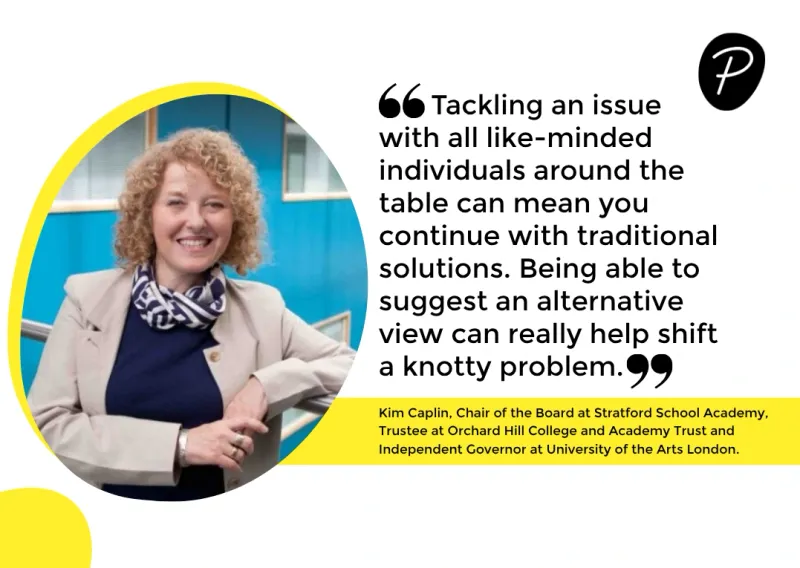
Why cross-sector board appointments strengthen governance: Insights from Kim Caplin’s journey
Read further
Five tips for non-executive director recruitment
Read further
Top 10 tips for hosting governor and trustee interview panels
Read further
Chairing the course to success: first-hand advice for new FE Chairs
Read further
Enhancing board recruitment through being a trustee of a local academy trust
Read further
How chairs and chief executives navigate challenge together
Read further
How to chair a board well: what effective boards and chairs do differently
Read further
What is values-based recruitment and how does it lead to better hires?
Read further
Strengthening boards with our trustee recruitment partnership
Read further
Unlocking the power of Development Boards
Read further