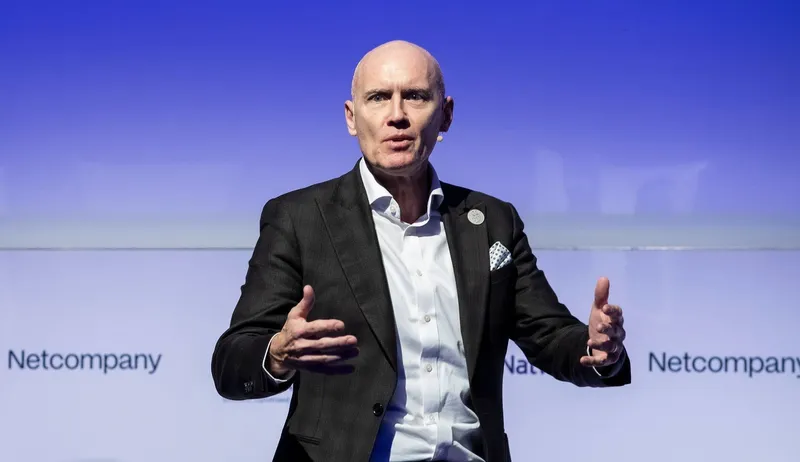
Awarding Bodies: Insights from the Experts – Deborah Jenkins
Deborah Jenkins joins Kristina to discuss the fascinating opportunities available through becoming an Awarding Bodies non-executive director!
Is that strategic experience important when considering the jump to the next level of your career?
Yes, I think if you want to advance to a very senior level in any organisation or field, there is a very different set of thinking skills that are needed and an ability to step beyond the operational side. As a non-executive, you will be asked: “what is the difference between the executive and non-executive?” And the key answer is supposed to be ‘of course, one must never overstep the line into operational’.
And I think when you are starting out as a non-exec, that’s a really difficult thing to go through. When introduced to a board, you will first question what decisions have been made and why.
As you progress in your career, you must be able to step back and have the oversight to see the difference between the strategy and the operational, but also understand the relationship and how the strategy is rooted in the operational.
I think cutting your teeth on being a non-executive in a smaller organisation to understand the overview and the accountability and how they relate to operations, can be a really beneficial step in your career.
The relationship between the CEO and the board is managed by the Chair. Being the Chair at NCFE, what would be your words of advice to aspiring Chairs about what to expect when holding that role?
Being the Chair is a very exciting and interesting role. But, like most things in life, the advantages are somewhat counterbalanced by an extra degree of accountability.
Being a Chair means inevitably becoming the pinpoint with the CEO on all the things that go wrong, as well as the things that go right. The Chair is responsible for managing the relationship between the board and the CEO to make those uncomfortable decisions that no one wants to make.
As long as you are aware of the risks, the Chair role is enormously valuable and interesting. You have to have tough conversations with the CEO, whilst being mindful to not overstep the operational line and not interfere in the interests of the organisation.
To me, there is a three-pointed approach to being a Chair:
- You have to be conscious and supportive of the needs of the Chief Executive because, in the end, they’re the ones that are operationally accountable.
- You have to be very clear that you are completely interrelated with the non-Execs on your board, because if you become separated from the non-execs of your board, that never works in the long run. The board works best when it is working cohesively to support the objectives of the organisation.
- And the third leg of the stool is the understanding of why your organisation is there, and are you connected or how are you connected to the users and staff of the organisation.
You need a degree of emotional intelligence to be able to balance these, as if you lose sight of any of them, things start to fall apart.
Finally, what would you say to anyone who thinks that being a non-executive is not for them?
You don’t fit into life as just an executive, or non-executive.
It may even be, that you haven’t ever considered yourself on the other side of that line from executive to non-executive.
The consideration of joining a board often stems from a philanthropic objective – you have skills and abilities that can be enormously valuable to an organisation or a cause.
But there are also things that you will personally get out of it. It’s a great way to gain a different, more strategic understanding of how an organisation is run.
The two other things you need to consider when taking on a board role are what accountability you’re taking on, but also what time you can commit. If you’re being appointed for 4 meetings per year for a three-year term, it doesn’t seem like an enormous commitment – but it can be an enormous opportunity.
It’s then just up to you to make your experience as enriching as you can.
However, if you’re the sort of person who thinks you know how to run the organisation, then it might not be the career for you, because one thing that you can never do as a non-executive is run the organisation, that’s given to the executives.
A very big thank you to Deborah for sharing her knowledge and experiences with being a non-executive and in the awarding bodies sector. Click here to connect with her on LinkedIn.
Category:Awarding organisations, membership & skills

Written by
Kristina Preston
Director | Awarding, Assessment & Professional Education
With over 10 years of recruitment experience at every level across the education and skills sectors, Kristina is skilled in the appointment of roles covering the design, development, delivery and quality assurance of educational products and services in awarding organisations, AAOs and professional membership bodies. She leads the partnership with the Federation of Awarding Bodies as their Platinum Supplier of executive search, recruitment, and board development services.
Kristina enjoys the camaraderie, collaboration, innovation, determination, and passion of the sectors she supports and advocates for this niche area of the UK and worldwide education system. She recognizes the far-reaching impact of awarding and skills qualifications at all levels, raising aspirations and helping people access life-changing qualifications and training.
Outside of work, Kristina recently became a mother and enjoys family travel. After 15 years as a competitive cheerleader, she serves as a Non-Executive Director on the board of SportCheer England, working toward official sport recognition. Kristina is also learning Polish to connect with her heritage and is an avid Aston Villa fan.
Related articles
Awarding Bodies: Insights from the Experts – Phil Beach CBE
Read further
How good governance strengthens awarding organisations
Read further
Awarding organisation trustee interview preparation guide (with bonus cheat sheet)
Read further
How to strengthen governance in awarding organisations
Read further
How cross-sector trustees strengthen awarding organisations
Read further
Awarding Bodies: Insights from the Experts – Everton Burke OBE
Read further
Leading the Science Council to be a truly influential voice in the science community as Chief Executive
Read further
What is a ‘reasonable’ adjustment in high-stakes assessment?
Read further
EPAO to AAO: Preparing for the apprenticeship assessment reform
Read further
Ofqual governance principles and what AO boards need to know
Read further
Awarding Bodies: Insights from the Experts – Candace Miller
Read further