Trusting the process: 3 building blocks for effective FE recruitment
Learn more about our FE recruitment processes, designed with client needs and the candidate journey at the heart.
Building blocks for effective FE recruitment
1. The briefing
The first and most important stage, is the briefing — this is where we get to know you, your organisation and the key things you need from your candidates.
We always strive to identify people with the right skills, the right experience, and a correlating set of values, so the briefing is a key step in ensuring we have the relevant information we need to locate the perfect candidates for the role. When I’m conducting a briefing with you as a client, I’ll have a tonne of questions and I always ask you to be as open and as honest as possible. This allows me to represent you to candidates in the best possible way — they will want to know about the ambition, the success, the opportunities and the challenges you face.
The briefing impacts our search all the way through the process. It lays the foundations for the marketing of the role in terms of its microsite, social media coverage and external advertising; it guides our in-depth conversations with candidates; it forms the basis of the way that we classify the candidates during a sift; and it informs the interview and selection processes.
2. The search
Whatever the search, a quality briefing sets the stage for a quality search. Finding the right people for the right role comes from a thorough understanding of who you are looking for.
It’s important to remember that some searches take longer than others, and timelines can be impacted by many different factors. At the very base level, we are researching and mapping potential contacts within the education sector, while considering what skills from other sectors might be transferable for your role. We consider areas of expertise and levels of seniority to conduct research in our database of over 130,000 contacts, social media, web-based research and conversations with our extensive networks to identify candidates who match the brief. We may also need to consider geographical requirements — I’m thankful for my geography degree in tackling this area!
We work across our teams and network and have expert researchers who can provide additional support to consultants. They are a key part of our process as they help us to shape our search, get us to look at things differently, and help widen and diversify our pool of candidates. We work together to create comprehensive candidate maps that create the foundations for our track record, unearthing candidates who offer incredible value.
3. Initial approach and conversations
This is the bit where we get to tell candidates all about your organisation and the details about the role — it’s my favourite part.
It’s all about engagement, getting to know people and building relationships. It’s always a privilege to be able to tell people about the excellent work going on in colleges, and why they are transformational places.
We repeat stages two and three until we get the right candidates to interview, constantly reviewing our research and finding new people to approach. We trust that through the tools we have, our team around us and the people we know, we will get to a successful outcome and find that hidden gem of a candidate who will help to transform your organisation.
Final thoughts
All of this activity happens before we have even received an application.
I have worked in, with, and across the further education my whole career — I love it. Colleges, and the people who work in them, have the power to change the trajectory of students’ lives.
They are where students find passion, dedication, and motivation and where they learn to think independently and contribute to wider society.
The leaders and the governors that are needed to bring out the best in students need to be innovative, transformative and inspiring.
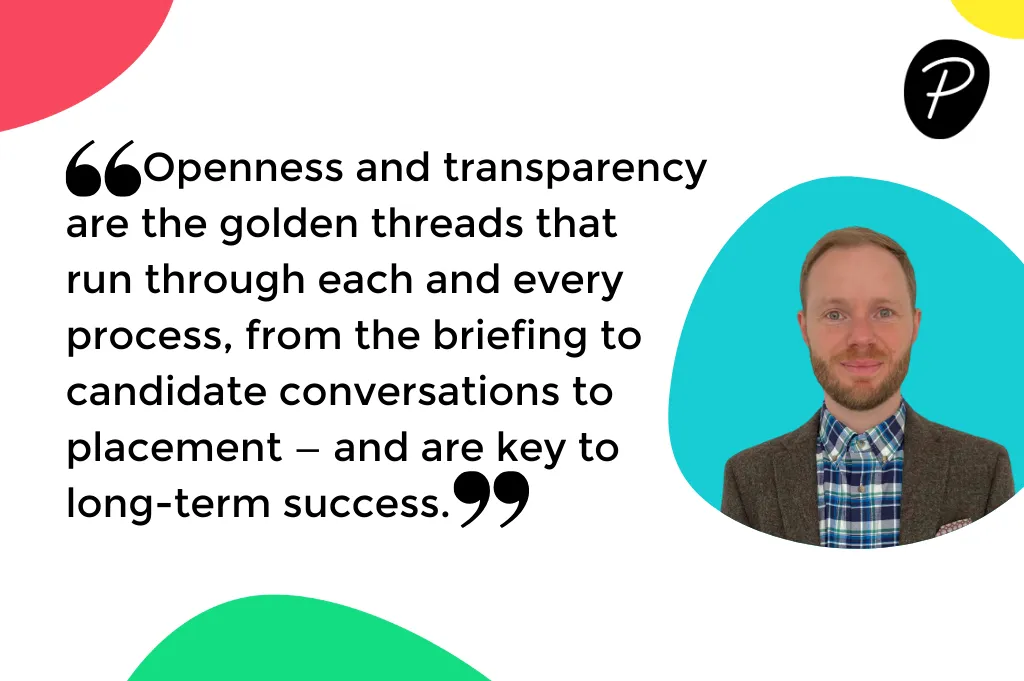
Openness and transparency are the golden threads that run through each and every process, from the briefing to candidate conversations to placement — and are key to long-term success.
It would be naïve to say that all searches are successful 100% of the time on the first go. But by building an open and transparent relationship through the briefing stage, I can tell you about our roadblocks, candidate and market feedback, or if part of the process isn’t working. Building a relationship based on mutual trust and respect allows us to work in partnership with you to overcome these challenges and ensure a successful process.
As I continue my career journey in the further education sector, I look forward to building many more open, transparent relationships with clients and candidates alike, as we transform the sector through values-led leadership.
Our success here is reflected in the feedback we receive from clients and candidates alike.
Category:Client advice

Written by
Dan Baxter
Principal Consultant | Further Education & Charities
Dan has always had a thirst for knowledge, a drive to learn more, and a desire to improve the spaces and communities around him. As the first in his family to have an A-Level, go to university and move out of their local town, Dan was fortunate to have gained so much from his education. But university quickly revealed that being the first to do something wasn't necessarily the easiest path. Dan discovered that his background suddenly had significant ramifications on his social, cultural and educational capital. This realisation and related experiences have been the driving force throughout their career.
Since completing a postgraduate degree in educational research almost 20 years ago, Dan has worked collaboratively across the FE sector for organisations that share his values: creating opportunity, championing those who need support and inspiring the next generation.
This passion led him to join Peridot, where he works with colleagues and clients who share the same ambition. Building relationships with people who care about the communities they serve; Dan meticulously searches to find exceptional leaders who will champion and inspire.
Outside of work, Dan is a northern-based school governor, a kid's football coach, a sports watcher, a book reader, a (very amateur) guitar player and a Pointless trophy winner. But most importantly, he is a husband and a dad to two amazing little people.
Related articles

The impact of FE leadership recruitment on student success and college performance
Read further
Why strong university governance matters more than ever.
Read further
Why executive search matters in higher education fundraising recruitment
Read further
Labour’s Educational Vision: Preparing MAT boards for change, part 2
Read further
Labour’s Educational Vision: Preparing MAT boards for change, part 1
Read further
Write an inclusive job description to attract diverse candidates
Read further
Why social impact matters in recruitment
Read further
Acting CEO vs interim CEO: what’s in a job title?
Read further
Challenges in charity leadership recruitment in divisive times
Read further
Recruit and retain outstanding fundraisers who grow with you
Read further
7 common hiring mistakes and how to avoid them
Read further