
AI in recruitment: what should stay human?
AI is reshaping recruitment, but not everything should be automated. Discover why human connection still matters in hiring.
Why AI in recruitment is only part of the picture.
Every time I scroll through LinkedIn, it seems like half the posts are about AI and automation.
Whatever your views on it, AI in recruitment isn’t going away. It’s evolving fast, with many tasks, and possibly jobs, becoming automated or heavily assisted by AI.
As a recruiter, I see both risks and opportunities. But I think we need to change our perspective on how we talk about it.
Instead of focusing only on what can be automated, we should start thinking more carefully about what we want to remain human.
What AI can do and what it can’t replace.
I’m fully behind using AI tools — they’ve genuinely helped me. As someone with Dyslexia and Dysgraphia, having an AI tool for proofreading has been a game changer. I also use calendar software to automate candidate bookings, and I’ve tried AI transcription tools.
There’s probably more I could automate. But I don’t think everything should be automated.
Here’s an example: A colleague recently shared their experience using a competitor’s recruitment service, which runs on a nearly fully automated process. Candidates are contacted based on their sign-up data, and the system handles all scheduling for both them and the client. Quick and easy. Sounds great, right?
Except, when they got to interviews, my colleague asked candidates an open question about what they knew about the organisation, and they were drastically underprepared. Having no human contact meant they hadn’t been briefed, and didn’t know enough about the organisation and its context. It’s not a disaster, but it’s not a brilliant outcome either. And it’s easy to avoid if there’s a human in the loop.
The human touch changes outcomes.
Conducting comprehensive client briefings and providing candidate guidance enables me to identify additional sensitivities that may be missed in an automated exchange. I recently spoke with a candidate who was nervous due to an impending birth and their maternity leave plans. We discussed their concerns and developed a plan that addressed start dates, flexibility and travel arrangements. It wouldn’t have suited everyone, but for them it made a real difference. They felt in control, and as a result, performed well in the interview and got the job.
Would that have happened in a fully automated process? I doubt it.
I have numerous examples where reaching out to connect with people has allowed me to understand their unique situation and context better, enabling me to make necessary adjustments to assist them. I’ve had candidates dealing with redundancy, health issues, or major relocations — all things that don’t show up in a CV but change everything about how they engage with an opportunity.
Use AI to save time, then spend it where it counts.
We should harness the power of AI to save time, but how we use that time matters. Focusing on thoughtful, human-to-human interactions is respectful and essential to maintaining our integrity as recruiters.
When people feel heard, properly briefed, and understood, they show up differently: more confident, more prepared and more invested.
Not only will the outcome always be better, but the experience everybody has along the way will be too.
Category:Artificial Intelligence

Written by
Bill Yuksel
Head of SME Charities
Bill Yuksel has a passion for creating environments where people can create systemic change and a real commitment to delivering inclusive, empowering and robust recruitment.
Since joining Peridot in 2016, Bill has led hundreds of chief executive, senior leadership and board appointments for charities, including appointing over 60+ chief executives across England, Wales and Scotland.
Bill also has experience leading transformation projects as a Trustee of two charities, where he secured better financial positions, led governance reform and recruited new CEOs and Trustees. Bill was also a member of the Transformation Board at the University of Suffolk Students' Union.
As a former two-year students' union Sabbatical Officer, Bill knows that many talented young people find it hard to find meaningful employment after their term of office and has offered pro-bono career workshops to empower young people and help them in their job hunts.
Bill is proud of his strong track record of recruiting women, people of colour, LGBTQ+, and disabled people into leadership positions.
Outside of work, Bill is a kinship foster carer to his young nephew. He is also a Trustee at Mindera UK Foundation, a charity providing education, funding, mentorship, and opportunities for underrepresented and underprivileged young people. He works as an Interim Co-Chair of the Small Charity Advisory Panel, supported by NCVO, and he is a Panel Member for Board Behaviours and Dynamics Working Group for the Charity Commission.
Related articles

How small charities can decide between an interim and permanent CEO
Read further
How to write a strong charity CEO CV
Read further
Challenges in charity leadership recruitment in divisive times
Read further
Leading without authority: How influence shapes real leadership
Read further
Strengthening boards with our trustee recruitment partnership
Read further
A new, agile CEO recruitment solution for small charities
Read further
Foster Care Fortnight 2025: The Power of Relationships
Read further
Should you become a small charity trustee?
Read further
Top 5 ways to overcome recruitment rejection: re-framing for success
Read further
Small Charity Week 2024: Children’s Heart Surgery Fund
Read further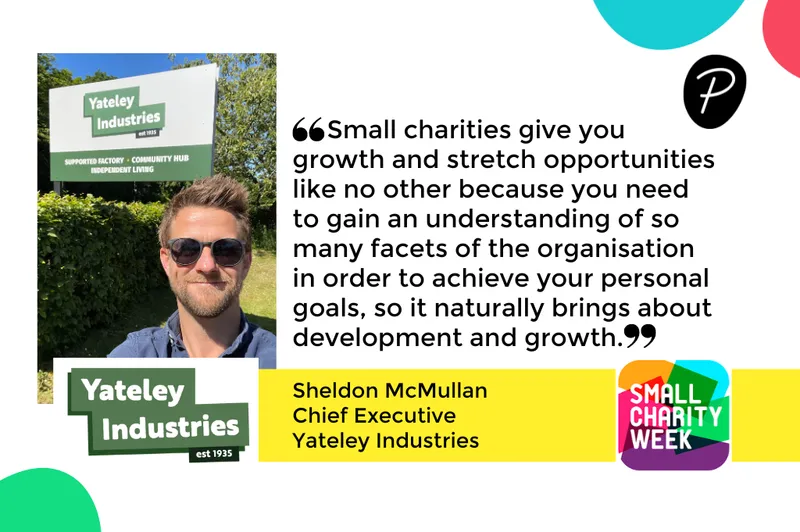
Small Charity Week 2024: Yateley Industries
Read further