
Is there a future for humans on charity boards?
How do charities use AI? With new technologies, will charities move towards more relaince on AI and how will this impact on charity boards? By Bill Yuksel.
Should charities embrace AI on their trustee boards?
I recently finished reading Homo Deus, by Yuval Noah Harari. In it, is a chapter that discusses a venture capitalist company that appointed an AI as an observer to the board. Called Vital, the AI helped save its organisation from the brink of bankruptcy.
This isn’t news, as both the book and the media coverage are a couple of years old. But it has captured my interest, and got me thinking about the role of AI and humans on charity boards in the future.
Vital uses parameters and algorithms to help analyse risk and inform decisions about investments. It has been able to overlook feelings, media trends and hype and make more informed decisions. Based on the success of the AI, Vital 2.0 is being developed.
“We treat it as a member of our board with observer status. As a board, we agreed that we would not make positive investment decisions without corroboration by Vital.” Dmitry Kaminskiy, managing partner of Deep Knowledge Ventures.
Given the nature of business for a venture capitalist, it’s easy to see how an AI member of a board can analyse risk. I can imagine how investment outcomes could be better if you overlook human intuition and emotions.
AI for charities – how could it work?
In my experience, some boards would struggle with a conference call, let alone having an integrated AI presence. But as technology advances, becomes more available and affordable, it could happen.
How might my role as a trustee change if such a tool were available to my board?
I can see value in having instant access to an AI that knows charity governance, finance and law inside out. It could have access to every ruling ever made by courts – every bit of guidance ever set by the Charity Commission. Accessing every set of minutes, accounts and strategies of every other charity. I have no doubt that such a tool would add value to me, and my board, but could it engage in debate and decision making?
How could an algorithm, interpret the complex, multifaceted human issues, that we deal with on charity boards?
Would having such a presence affect our ability to be subjective? Would it go against decisions that might be at times less commercial? What about making decisions that are more socially focused, or dare I say it political, and in line with our charitable objectives? Can you develop artificial intelligence with values and that can understand social motives?
There are more questions than answers available at the moment. In the future, humans will need to make complex and ethical decisions about the growing importance (and reliance) on technology.
Where should we draw the line?
About the author:
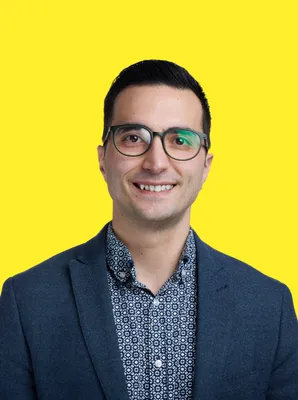
Bill Yuksel is Business Manager at Peridot Partners. A trustee himself, he supports progressive students’ unions to recruit brilliant leaders.
Category:Artificial Intelligence
Written by
Bill Yuksel
Head of SME Charities
Bill Yuksel has a passion for creating environments where people can create systemic change and a real commitment to delivering inclusive, empowering and robust recruitment.
Since joining Peridot in 2016, Bill has led hundreds of chief executive, senior leadership and board appointments for charities, including appointing over 60+ chief executives across England, Wales and Scotland.
Bill also has experience leading transformation projects as a Trustee of two charities, where he secured better financial positions, led governance reform and recruited new CEOs and Trustees. Bill was also a member of the Transformation Board at the University of Suffolk Students' Union.
As a former two-year students' union Sabbatical Officer, Bill knows that many talented young people find it hard to find meaningful employment after their term of office and has offered pro-bono career workshops to empower young people and help them in their job hunts.
Bill is proud of his strong track record of recruiting women, people of colour, LGBTQ+, and disabled people into leadership positions.
Outside of work, Bill is a kinship foster carer to his young nephew. He is also a Trustee at Mindera UK Foundation, a charity providing education, funding, mentorship, and opportunities for underrepresented and underprivileged young people. He works as an Interim Co-Chair of the Small Charity Advisory Panel, supported by NCVO, and he is a Panel Member for Board Behaviours and Dynamics Working Group for the Charity Commission.
Related articles

How small charities can decide between an interim and permanent CEO
Read further
How to write a strong charity CEO CV
Read further
Challenges in charity leadership recruitment in divisive times
Read further
Leading without authority: How influence shapes real leadership
Read further
Strengthening boards with our trustee recruitment partnership
Read further
A new, agile CEO recruitment solution for small charities
Read further
Foster Care Fortnight 2025: The Power of Relationships
Read further
Should you become a small charity trustee?
Read further
Top 5 ways to overcome recruitment rejection: re-framing for success
Read further
Small Charity Week 2024: Children’s Heart Surgery Fund
Read further
Small Charity Week 2024: Yateley Industries
Read further