
How to use the STAR method to answer job interview questions
Learn how to use the STAR method to answer job interview questions clearly and break down your experience to show impact and get results.
Situation.
Start by setting the scene. It’s easy to assume the panel knows your role or the context behind your example, but they usually don’t.
Give a simple overview of your job at the time and what was happening in the organisation. A clear explanation shows strong communication skills and gives your answer solid foundations.
One way to think about this is through the Feynman Technique:
- Know your subject.
- Explain it to a 12-year-old.
- Reflect, refine, simplify.
- Organise and review.
You need to provide enough backstory to explain why the situation mattered and what you were walking into, but a few well-chosen sentences are often enough.
Task.
Once you’ve outlined the situation, explain what needed to be done. Be specific about your objective to allow the panel to understand your responsibilities and the expectations placed on you.
A good “Task” answer covers:
- Who was involved?
- What was the objective?
- When did it need to be completed?
- Why did it need to be done?
You want to give the panel just enough to understand the challenge before you move on to what you actually did, so one or two sentences for each point is enough.
Action.
The “Action” is the heart of your answer. Talk through the steps you took, why you took them, and how you involved others. This part shows the panel your approach, your thinking, and the behaviours you bring to work.
Focus on:
- The key actions you took and your reasons for them.
- How you worked with others, especially around stakeholder communication.
- The connection between your actions and the task you were responsible for.
If you’re describing a group effort, be clear about your contribution. Use “I” rather than “we”, so the panel understands what you personally delivered.
Result.
Finish strong by showing what changed because of your actions and demostrate the value you brought to the situation. Provide clear outcomes, using figures or feedback where available. Specifics help the panel remember your example and understand the scale of your impact.
Consider including:
- A measurable outcome (e.g. increased engagement, reduced costs, successful delivery).
- Any positive feedback you received from a manager, client or stakeholder.
- What you learned, and how it’s shaped the way you work now.
Linking the result back to the role you’re applying for shows that your experience is not just relevant, but valuable.
Choosing examples for your STAR method answer.
The best examples are the ones that match the role and let you show more than one skill at a time.
When deciding which of your answers best suits the question, consider:
- Is it relevant? Does it clearly link to the behaviour or skill they’re assessing?
- Is it complex enough? Will it give you room to show your judgement, adaptability or leadership?
- What was the impact? Can you explain how your actions made a difference to the organisation, team or customer?
If you’re struggling to pick, look at the job description and person specification and think of moments where you delivered results that line up with what they’re asking for.
Good preparation = good performance.
Interviews can feel overwhelming, but breaking your preparation into simple steps makes it manageable. Have a few STAR examples ready. Know your stories, but don’t over-rehearse.
The panel isn’t listening for the “right” answer; they want to see how you think, what matters to you, and how you’d work with them.
Learn more about preparing for a staff panel interview.
Category:Candidate advice
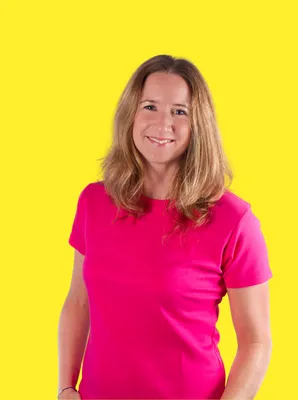
Written by
Rachel Davies
Managing Consultant | Charities
Rachel Davies is a Managing Consultant at Peridot's Not for Profit Practice known for her client-focused approach and passion for people development. She holds a BSc and MSc in Sport & Exercise Science. Her career began as a Performance Lifestyle Adviser with the English Institute of Sport, advising elite athletes on career transitions. She later served as Head of Careers at a private school.
For seven years, Rachel ran a successful baby and toddler swimming business, managing HR, finance, and delivery. In 2018, she earned the 'Working Mums Franchisee of the Year' award. Her diverse experience brings a unique, holistic perspective to recruitment work.
At Peridot, Rachel has delivered executive and board-level placements for various organizations. She enjoys open-water swimming, cycling, and synchronized swimming, often combining travel with international competitions.
Related articles

Being an internal candidate in the UK charity sector
Read further
How many essential criteria do you need to meet before applying for a job?
Read further
Transferable skills that make a great recruitment consultant
Read further
How to overcome imposter syndrome when starting a new role
Read further
How to overcome imposter syndrome when applying for a new role
Read further
Understanding charity CEO salaries in the UK
Read further
Your first 90 days as a charity CEO: what to prioritise (and what can wait)
Read further
How to write a strong charity CEO CV
Read further
6 ways to gain more confidence and overcome interview anxiety
Read further
What is Good Governance?
Read further
Personal and professional benefits of becoming a charity trustee
Read further