
Charity leadership: why choose a career in not for profit?
If you are considering a career in charity leadership and becoming a CEO of a not for profit, read on to learn what it can offer.
Becoming a charity CEO might be a career goal for many people. Whether they have spent the majority of their career in the not for profit sector or transitioned from a corporate job, I have helped multiple people get their first charity leadership role.
While there are many professional benefits of an executive career in the charity sector, the main driver is almost always the motivation to have a positive social impact and help a cause you care about.
Leaving the corporate world can be a big change, but it is certainly a rewarding one. I seldom need to ‘coax’ candidates out of their corporate roles; they’ve usually already decided to do something more meaningful and socially impactful.
If you are considering a career in charity leadership, I think you already know what you want to do deep down – the drive to create a meaningful impact through work is hard to dismiss.
But if you are still unsure about making this huge leap of faith, read on to learn what a career in charity leadership can offer.
Support a cause you care about
Imagine if your KPIs weren’t about sales or profit but social impact. Most business leadership skills are directly transferrable to the not for profit sector. They could be used in a variety of ways; to help an organisation enhance its impact, grow in scale – whether this is organic growth or through merger, or diversify its service offer.
If you deeply care about an issue, whether it’s social justice, poverty, homelessness, health and social care, the environment, global development or anything else, you can potentially support so many people through your work every day, giving you the reason to wake up in the morning and make even the hardest of days worthwhile.
I appointed a senior leader who had worked in international consultancy to a social enterprise supporting people experiencing food poverty. The organisation wanted to scale its operations, which was a big element of her experience. She was also an active volunteer with homeless charities, and food poverty was a keen area she wanted to support.
This was just one of many examples of how experience and values alignment perfectly complement each other. Does this resonate with you?
Lived experience or personal connection
I recently recruited a CEO for a large hospice and the client needed transformational change experience. One of the shortlisted candidates lived in the community, had fundraised for the hospice on multiple occasions and had personal experience of a close friend and their family being supported by the hospice at the end of their life.
A personal connection to the cause can be an even bigger driver when it comes to motivation to work for a charity. It can also come in useful when it comes to being aware of your service users’ experiences and advocating for them.
Professional growth
A not for profit leadership role can also offer significant opportunities for professional development.
For example, I appointed a senior leader who had worked in senior marketing roles in international telecoms to an award-winning social enterprise providing language services that was part of a large national charity supporting migrants. He had supported and mentored migrants in his own community, so this was his connection to the cause, but they also wanted someone who could help the growth of the enterprise, developing into new markets and new services. This had been a keen emphasis of his experience so this dovetailed perfectly with what was needed.
If you can find a role that excites you professionally as well as allows you to support a cause you care about, you hit gold.
Charities also offer the opportunity to develop in areas where you wouldn’t be able to in the commercial sector, such as fundraising, volunteer management and advocacy.
Volunteering or trustee experience
Becoming a volunteer or trustee can be a good first foray into finding out about the not for profit sector and how individual organisations work and the environment they’re situated in. Beyond giving you valuable insight, it also gives you connections and opportunities to develop your networks within his space. Furthermore, once you start applying for leadership roles, this will also demonstrate an existing commitment to the sector and pertinent insights to draw on in the application and interview process.
Explore our current Trustee opportunities on charity and education boards.
Work culture
Work culture is more and more talked about, and people are seeking more flexible and inclusive work environments. While it’s not the main drive for most people to pursue a career in not for profit, it is definitely a nice to have!
My colleague, Josh Larkin, Senior Consultant in the fundraising team, has shared some of the main trends he sees in work culture in the charity sector:
- A shared sense of purpose in the organisation and a feeling that what you do is worthwhile.
- More autonomy in role and freedom to be creative and try new things.
- Nice people to work with. People working at the same charity generally have similar motivations and world views, which makes collaboration easier, too.
- Flexible and hybrid working, usually with a more relaxed dress code – you rarely need to wear a suit unless it’s an event, which is also quite a nice perk of the job.
Is the charity sector less competitive than the commercial sector?
In some cases, the charity sector is very competitive. This is why you need to understand and express why the connection to the cause matters, what motivates you, and how your experience can be transferable to that environment.
Learn how to stand out in a competitive job market with these actionable tips.
Is charity leadership easier than business leadership?
Leadership in the charity sector is not an easy option. In fact, it can be extremely challenging, given the continual pressures on finding funding, driving sustainability, dealing with multiple stakeholders, increasing beneficiary needs, managing reputation, and needing to understand regulation.
The challenging element is part of the draw, though. If you want a challenge, but the reward is to make a fundamental and positive difference in people’s lives, you have an interesting duality—professional and purposeful.
Build a legacy of positive change
In conclusion, people who become charity CEOs are motivated by leaving a lasting positive impact on society. If you have this drive, you are cut out to be a not for profit leader. Even on weeks when work gets challenging, you will be motivated by your goal of making the world a little bit better.
You will also know to prioritise people—whether employees, volunteers, or service users—because doing so will have the biggest positive impact. That is the sign of a great leader.
If you decided that charity leadership is for you, continue to our roadmap for getting your first not for profit executive role or take a look at our current opportunities.
Category:Candidate advice

Written by
Philippa Fabry
Partner
Philippa Fabry is a partner and shareholder at Peridot Partners, leading the Not for Profit Practice with expertise, creativity and empathy. With over 20 years of executive search experience across private, public, and not for profit sectors, she excels in recruiting leadership roles for charities. Her leadership expertise extends beyond Peridot as a mentor for a youth charity and leadership coach.
Philippa began her career as a curator in visual arts after graduating from Manchester University. She worked for a prestigious London art gallery before becoming Principal Curator of Contemporary Art at Harewood House Trust. She transitioned to recruitment in 2001 at an international headhunting firm, then served as Assistant Director at Veredus before joining Peridot Partners in 2011, becoming Director in 2015.
Her experience includes supporting organisations through Founder/CEO transitions, establishing new or renewed boards, and helping commercial candidates transition to the not for profit sector. She has partnered with UK charities to appoint skilled executives and diverse trustees.
Outside work, Philippa is an avid runner who has completed several half marathons and is training for her first Sprint Triathlon. She balances career with family and social life, passionate about the arts and helping young people reach their potential.
Related articles

Advice for aspiring charity CEOs: Here’s what every future CEO should be thinking about
Read further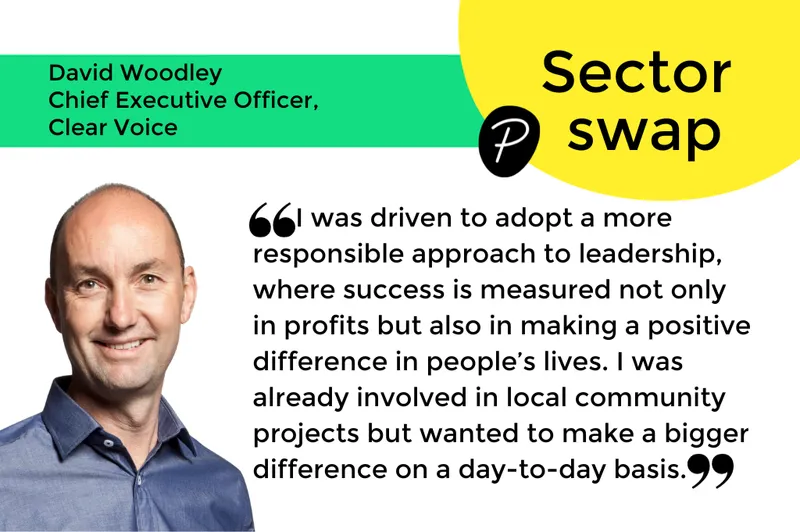
Sector swap: applying commercial experience to the charity landscape with David Woodley
Read further
How do you find a new job in senior leadership?
Read further
Understanding charity CEO salaries in the UK
Read further
Being an internal candidate in the UK charity sector
Read further
Your first 90 days as a charity CEO: what to prioritise (and what can wait)
Read further
How to write a strong charity CEO CV
Read further
6 ways to gain more confidence and overcome interview anxiety
Read further
What is Good Governance?
Read further
Personal and professional benefits of becoming a charity trustee
Read further
Five tips for your first board meeting
Read further